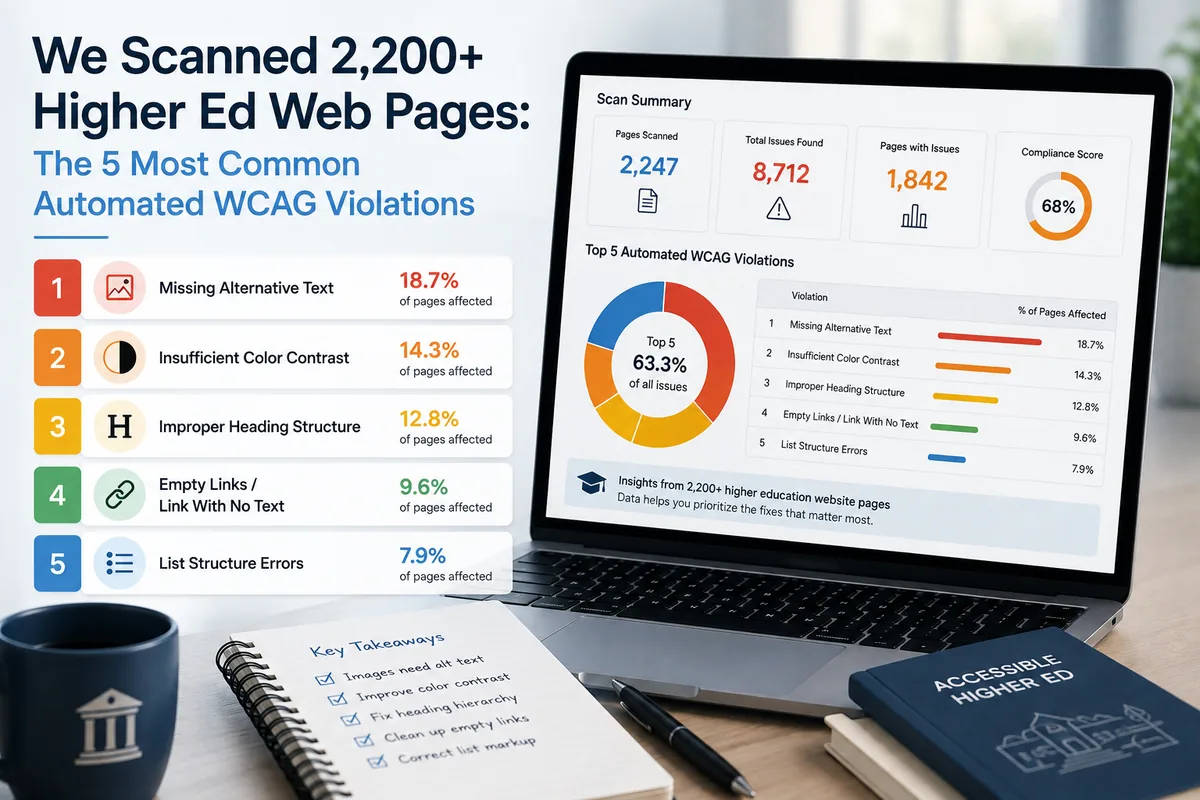
5 Most Common WCAG Violations on College Sites
The five accessibility violations we find most often on higher-ed websites, what each breaks, how assistive technology users hit them, and how to fix them.
G GuardGrid Team
Deadlines, standards, lawsuits, and how to actually fix things. Written for the people who own the website.
The five accessibility violations we find most often on higher-ed websites, what each breaks, how assistive technology users hit them, and how to fix them.
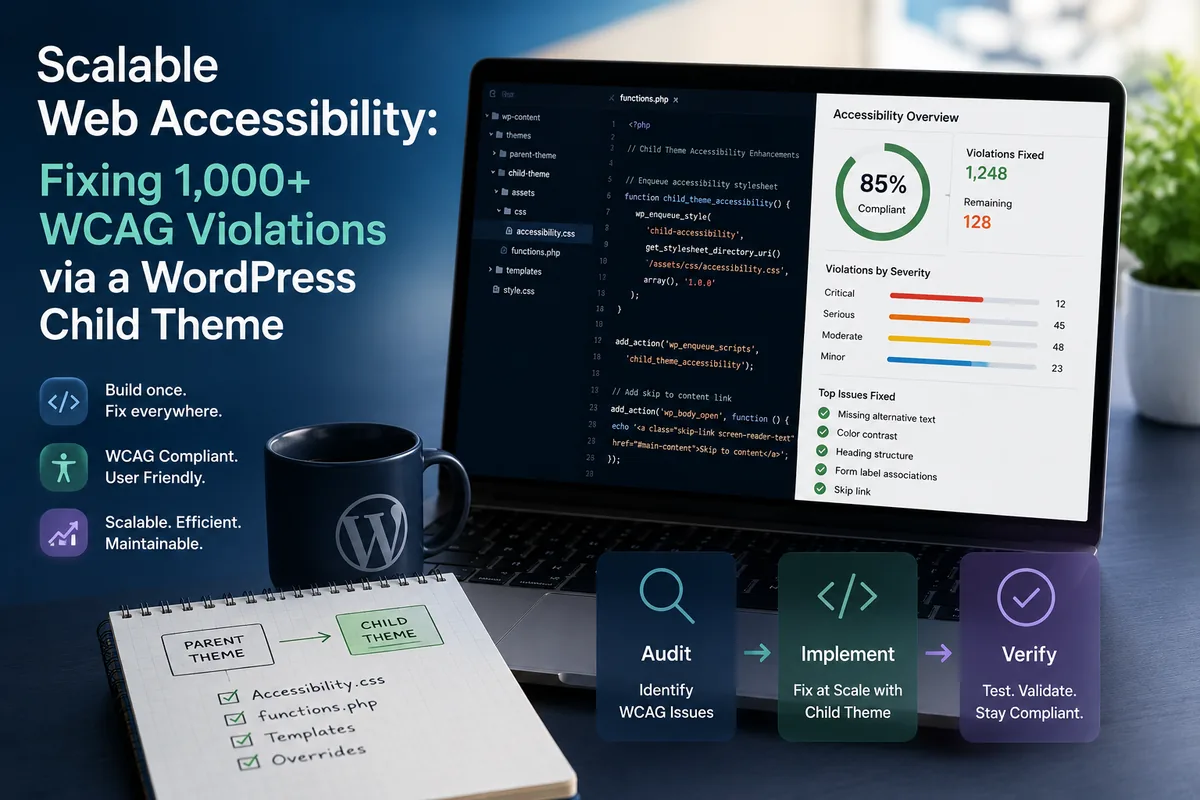
Theme-level WordPress accessibility remediation cascades across every page and survives updates. How to fix contrast, focus, landmarks, and ARIA at the source.
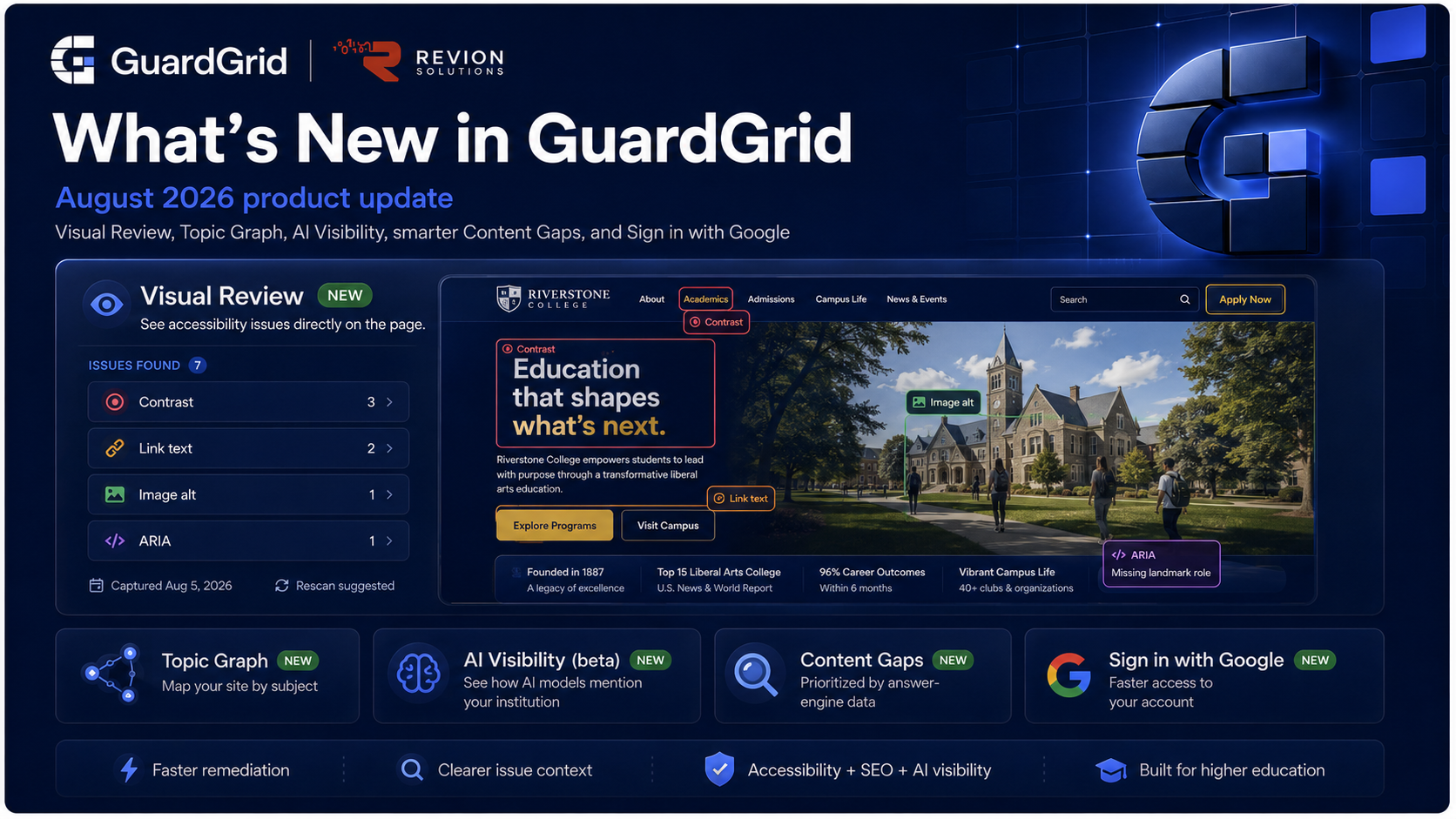
AI visibility measurement across answer engines, Content Gaps, a topic graph for large sites, and Visual Review that marks each violation on the page.
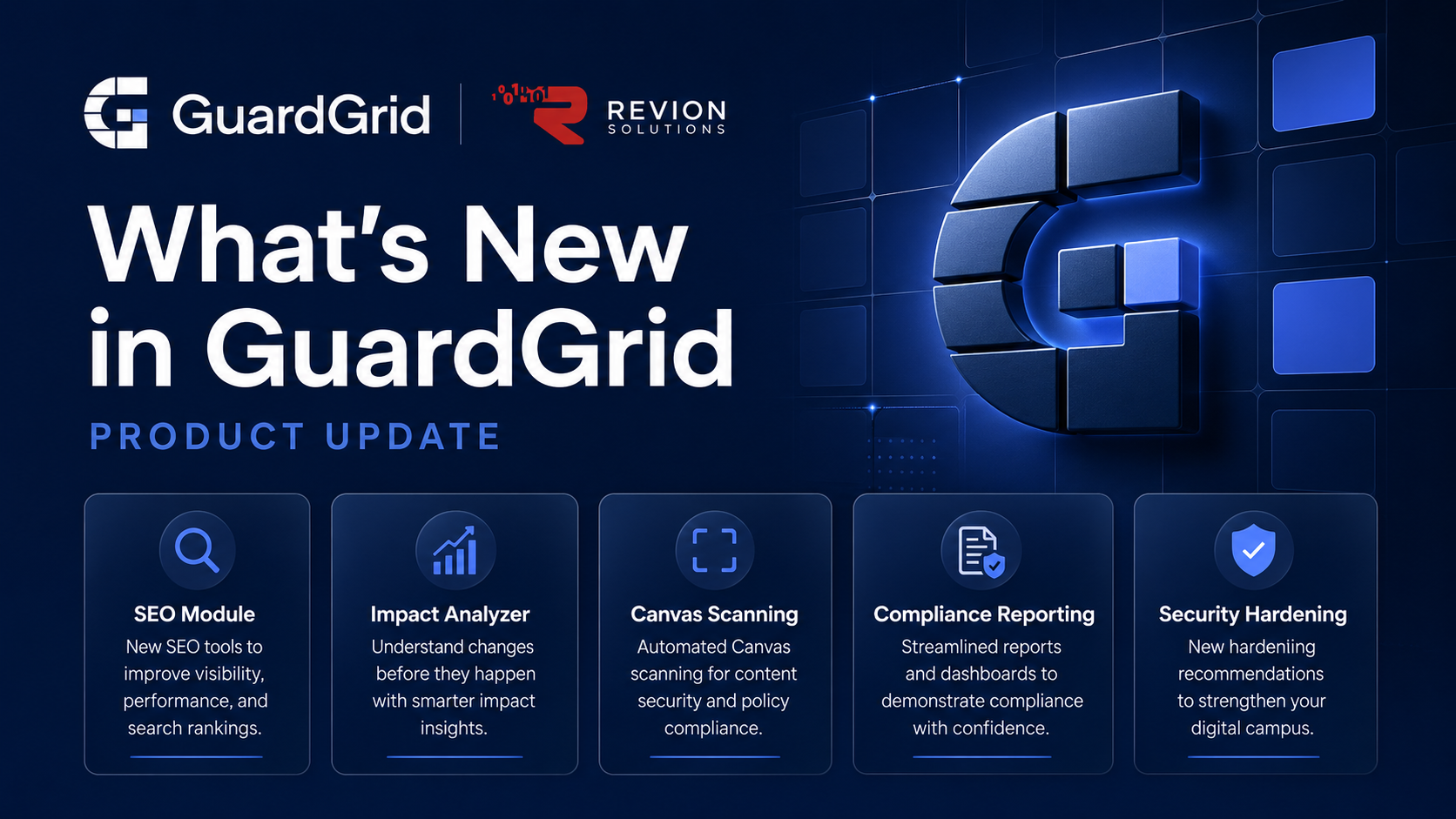
Faster full-site scans, scanning that succeeds behind strict Content Security Policies, Canvas LMS course checks, and a broad security hardening pass.

Automated scanning catches a minority of WCAG issues, but it catches them early and everywhere. How to use it well, and where human review is still required.

Not every WCAG violation carries the same weight. How severity scoring works, and how to sequence a fix list so the first week clears the most real risk.
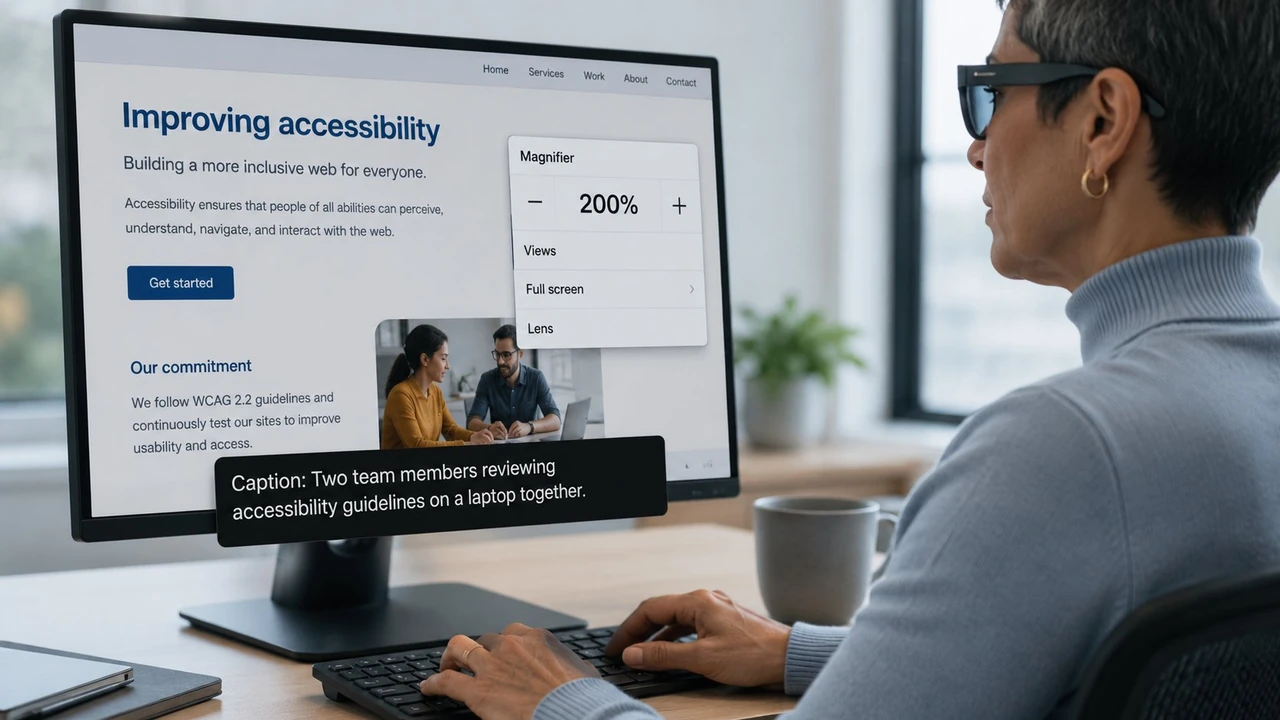
The DOJ extended the Title II web compliance dates to April 26, 2027 and April 26, 2028. Who falls where, what WCAG 2.1 AA requires, and what to do now.
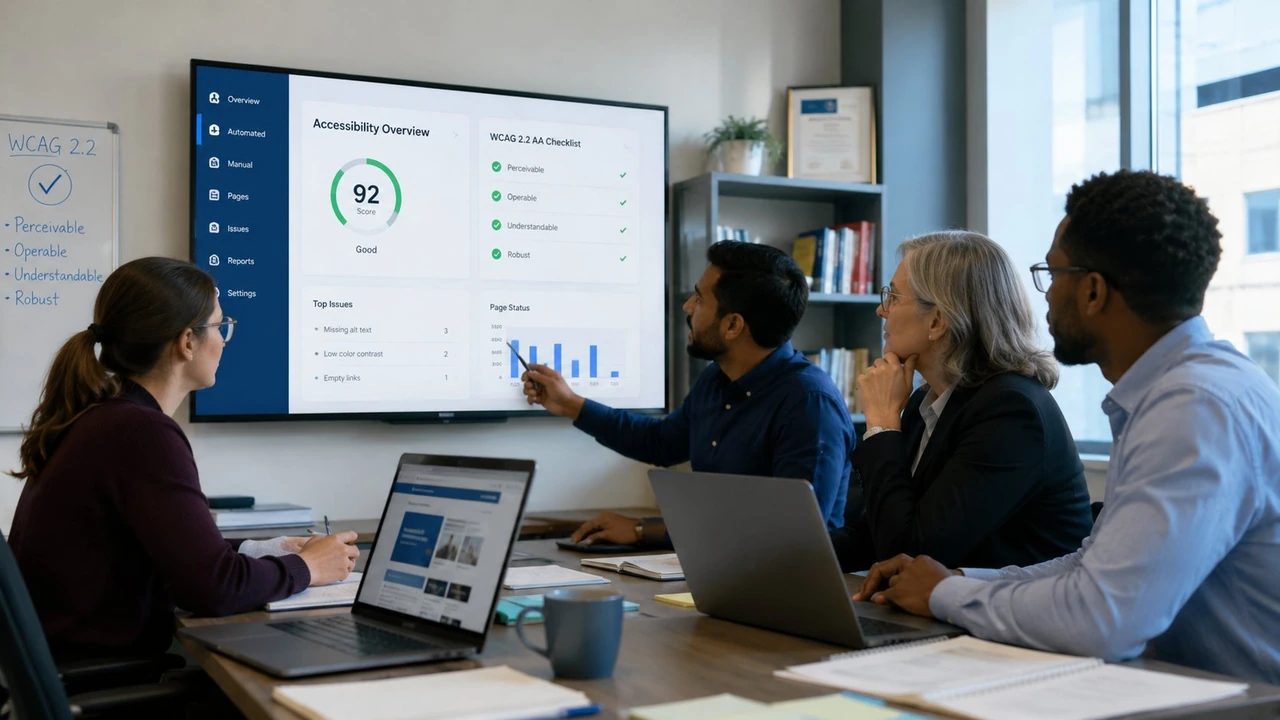
WCAG 2.2 added nine success criteria covering cognitive load, mobile interaction, and authentication. What changed, why it changed, and how to test each one.
Run a free accessibility scan and see exactly where you stand against WCAG today.